
Kanav Tuteja knew what he wanted before he arrived: study Finance and Investment Banking, then go and work in the City. He's in his first year now, and alongside the degree, he's already taken on a fair bit. He's a Programme Representative, he's on the committee of the Corporate Investment Banking society, and he helped set up a brand new society of his own. If you reckon university is just lectures and deadlines, his first year is a decent argument against that.
Why Finance and Investment Banking?
Kanav's interest in finance crept up on him over time. "I've always been curious about how markets work and how financial decisions shape businesses and the wider economy," he says. Business, Economics and Accounting at school pushed it further, and by the time he was applying, investment banking was the plan.
Settling into first year
The work is hard, he won't pretend otherwise, but the jump into university felt less daunting than he'd braced for. When he got stuck early on, his lecturers were easy to reach, which helped settle his nerves quickly. He rates how the teaching's done, too. Lecturers explain things through current examples and case studies, and seminars are built around discussion, so there's room to ask questions and get to grips with the trickier stuff.
His week's built around three teaching days, normally a lecture and a seminar for the same module, back-to-back. The time in between mostly goes on the library, catching up and keeping his workload from stacking up. That leaves him a decent bit of breathing room around the studying. The location helps too. Greenwich is a short train from Canary Wharf and the City, and there's a Bloomberg Trading Floor on campus with the same terminals used across the industry, so the kind of work he's aiming for doesn't feel a million miles away.
Outside the classroom...
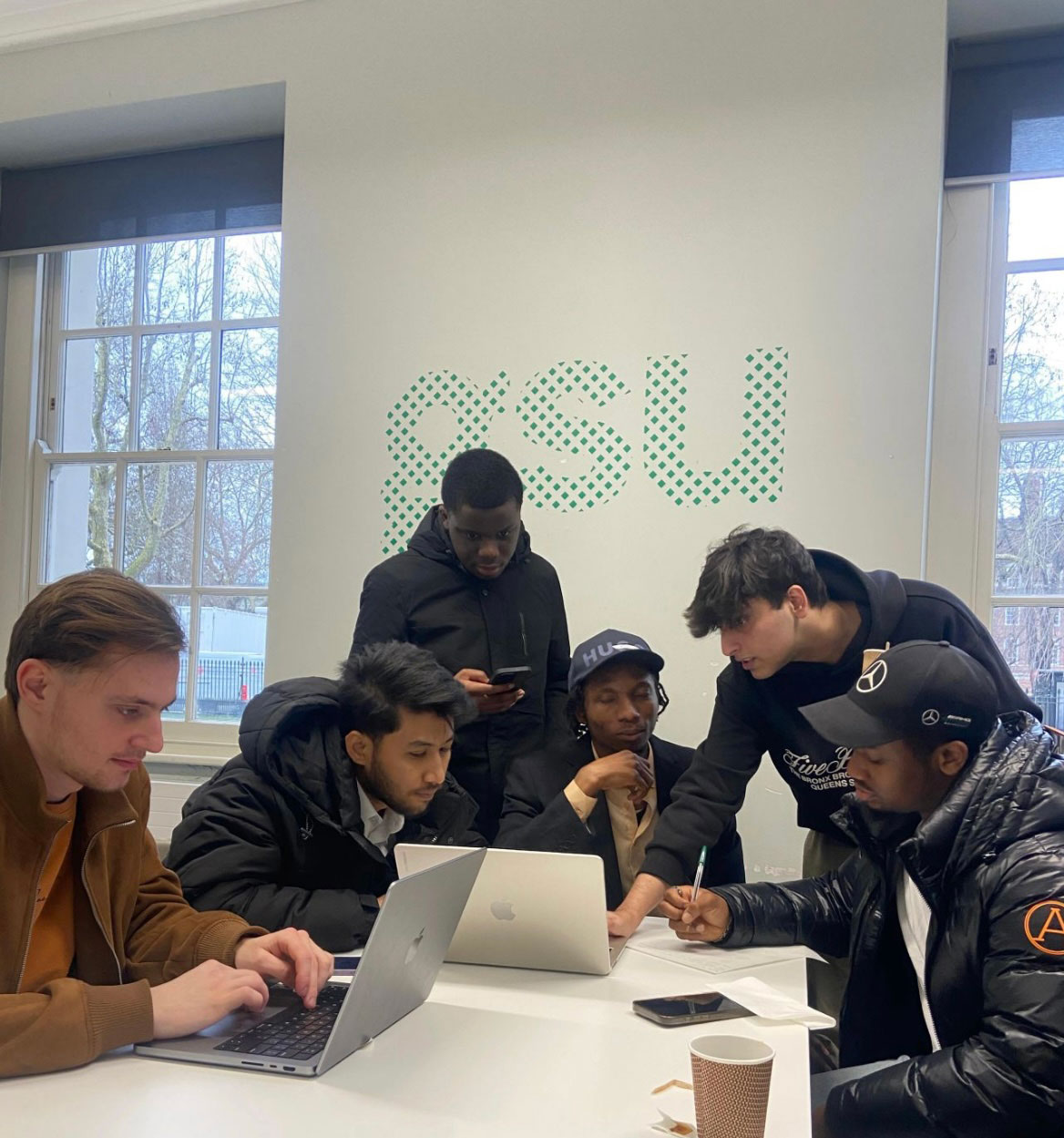
The stuff that's had nothing to do with grades has mattered to him just as much. Being a Programme Representative is the first thing he brings up. It puts him in the middle, taking his coursemates' feedback to staff and helping each side get where the other's coming from, and it's made him a lot more comfortable talking to academics.
Then there's the societies. He's in a few, including Bollywood, Hindu, Indian, Corporate Investment Banking and Financial Services, and Fintech Innovators, and he's on the committee for two: Client Relationship Manager at the CIB society, and Vice President at Fintech Innovators, which is brand new. "Building one from the ground up has let me develop new skills and make proper connections with people who share my interests," he says. He reckons he's learned more about teamwork and accountability from those than from any seminar.
What first year has taught him
Living on his own has changed how he sees things. "It made me realise how much of life is in your own hands, your health, your career, the direction you take," he says. He's tighter with deadlines now, surer about where he's headed, and being in London, a global finance hub, has only made him more ambitious.
He's clear on what he'd tell someone who's worried it'll all just be hard work:
"University is what you make of it. If you engage with opportunities, step outside your comfort zone and manage your time well, it becomes a place where you grow academically, socially and personally, not just a cycle of lectures and deadlines"
His first year so far backs that up.
Fancy a first year like Kanav's? The best way to find out is to come and see it, so book an open day and have a proper look around the campus and the Bloomberg Trading Floor. If you'd sooner get into the detail first, take a closer look at BSc (Hons) Finance and Investment Banking, then apply whenever you're ready.
IMPORTANT NOTE: Please note that course timetables, the availability of modules and opportunities offered to, and services for, students can change over time - i.e. things may not be available from one year to the next - and that some things may also not be available to you if you are joining Greenwich as a direct entry student. In the case of modules, please always check the 'What will you study' section of the course webpage for the course and entry year you are interested in. You can find an index of all our subject areas, within which you will find the individual course pages, at: https://www.gre.ac.uk/subjects