
5th May 2027 - 7th May 2027
Greenwich Campus
Old Royal Naval College, Park Row, London SE10 9LS
SynTech 2027 brings together leading researchers from academia and industry to explore the technologies and ideas reshaping modern chemical synthesis. Across three days in Greenwich, the symposium will connect electrosynthesis, flow chemistry, mechanochemistry, biocatalysis, artificial intelligence, catalysis, process chemistry and other emerging approaches to reaction discovery and manufacture. Following the fully booked 2026 meeting, SynTech returns with a new international speaker line-up and the same emphasis on excellent science, discussion and cross-disciplinary interaction. The meeting is designed for PhD researchers, postdoctoral scientists, academics and industrial researchers seeking methods beyond their immediate specialism and new collaborations. Professor Frances H. Arnold Frances Arnold is the Linus Pauling Professor of Chemical Engineering, Bioengineering and Biochemistry at Caltech. Her pioneering work established directed evolution as a powerful approach for engineering enzymes and proteins, and she was awarded the 2018 Nobel Prize in Chemistry Professor Siegfried R. Waldvogel Siegfried Waldvogel is Director of the Department of Electrosynthesis at the Max Planck Institute for Chemical Energy Conversion. His research develops preparative electrochemical methods, reaction concepts and enabling technologies for practical organic synthesis. Professor Véronique Gouverneur FRS Véronique Gouverneur is the Waynflete Professor of Chemistry at the University of Oxford. Her research has delivered major advances in fluorination, radiochemistry, catalysis and circular fluorochemistry, with applications spanning synthesis, pharmaceutical science and molecular imaging. Professor Hajime Ito Hajime Ito is Professor at Hokkaido University and a leading researcher in organoboron and organosilicon chemistry, asymmetric synthesis and mechanochemical organic synthesis. His work has helped establish solid-state reaction development as a powerful platform for discovering new synthetic reactivity. Professor Bartosz A. Grzybowski Bartosz Grzybowski is Distinguished Professor in the Department of Chemistry at UNIST and Director of the IBS Center for Algorithmic and Robotized Synthesis. His research combines algorithms, reaction-network analysis, artificial intelligence and laboratory robotics to accelerate synthesis planning and chemical discovery. Professor C. Oliver Kappe C. Oliver Kappe is Professor at the Institute of Chemistry, University of Graz, where he leads research in enabling technologies for organic synthesis. His work is internationally recognised for continuous-flow chemistry, reaction engineering, automation and the translation of synthetic methods into robust and scalable processes. Professor Cristina Nevado Cristina Nevado is Professor of Organic Chemistry at the University of Zurich. Her research centres on complex molecule synthesis and new organometallic reactions, particularly late-transition-metal catalysis and synthetic methods that enable rapid access to structurally sophisticated molecules. Dr Martin Eastgate Martin Eastgate is Vice President and Head of CMC Portfolio Strategy and Integration within Product Development at Bristol Myers Squibb. A process chemist by training, his career spans route and process development, CMC strategy, scientific leadership and the translation of complex pharmaceutical programmes toward manufacture. Dr Margaret M. Faul Margaret Faul is Vice President of Drug Substance Technologies within Process Development and Amgen Massachusetts Site Head. Her career has focused on advancing pharmaceutical processes from development through commercial manufacture and integrating new technologies into drug substance development. AsymChem speaker (to be confirmed) AsymChem will contribute a talk on the scale-up of enabling technologies such as flow chemistry, photochemistry and electrochemistry, including other novel synthetic technologies. Professor Tehshik P. Yoon Tehshik Yoon is Professor of Chemistry at the University of Wisconsin–Madison. His research develops new catalytic methods for organic synthesis, with particular emphasis on visible-light photochemistry, reaction selectivity and more sustainable approaches to complex molecule synthesis. The full programme will be published closer to the meeting. SynTech 2027 will combine invited plenary lectures, selected contributed short talks, poster sessions and substantial time for discussion and networking. Milestone Date Registration opens 25 September 2026 Public announcement 25 September 2026 Abstracts reviewed on a rolling basis On receipt of the form and PDF Short talk accepted / Poster accepted / Not accepted Aim within 10 working days of a complete submission Priority deadline for contributed short talks 4 December 2026 Main contributed short-talk programme finalised By 18 December 2026 Poster abstracts continue rolling, subject to space After 4 December Early-bird registration deadline 12 February 2027 Final poster abstract deadline, subject to availability 12 March 2027 Standard registration closes 9 April 2027 SynTech 2027 5-7 May 2027 Abstract submissions open on 25 September 2026 and are reviewed on a rolling basis. Applicants will normally receive one of three decisions - short talk accepted, poster accepted or not accepted - within 10 working days. Posters are open to applicants at every career stage. Contributed short-talk places are limited and are primarily intended for academics. Priority will be given to researchers in their first independent academic appointment, such as a first Lecturer, Assistant Professor or independent Group Leader position. Other applicants may still request consideration for a short talk. Priority deadline for contributed short talks: 4 December 2026. The main contributed short-talk programme will be finalised by 18 December 2026. Poster abstracts will continue to be considered after 4 December, subject to available space. The final poster abstract deadline is 12 March 2027. Both the Dropbox PDF upload and the Microsoft abstract form are required for a complete submission. If your attendance depends on abstract acceptance, submit your abstract before paying or registering. Once accepted, you can pay through the University Store and register immediately. Abstract acceptance does not complete event registration. Accepted presenters must also pay the registration fee and complete the separate registration form. Abstract submission form: https://forms.cloud.microsoft/e/GGeG0c6xgh Templates: Poster abstract template (Word) | Short-talk abstract template (Word) PDF upload: Upload your one-page PDF through Dropbox Registration opens on 25 September 2026. If your attendance depends on abstract acceptance, submit your abstract first and wait for the decision before paying. The early-bird registration deadline is 12 February 2027, and standard registration closes on 9 April 2027. Do not forget the conference dinner. It is optional and is not included in the registration fee. To attend, book and pay for the separate Informal Dinner option on the University Store. No accommodation is provided or arranged this year. Please book and pay for your own accommodation. Registration is confirmed only after the submitted code has been matched to a completed Store payment. The applicable rate is determined by the date of Store payment, not solely by the date the form is submitted. Delegate category Early bird Standard Student / postdoctoral researcher £225 £275 Academic £400 £500 Industry £700 £850 The registration form asks separately whether attendees agree to share their name, affiliation and email address with other registered attendees and with the sponsors named at the time. Neither option is preselected, and saying No will not affect registration. SynTech is organised on a not-for-profit basis. Sponsorship helps support invited-speaker participation, keep registration accessible to early-career researchers and improve the overall scientific and networking experience. Potential partnership opportunities include conference sponsorship, exhibition space, technology demonstrations, poster-session support, networking or catering support, and early-career researcher support. Bespoke packages can be discussed with the organisers. Sponsorship contact: Professor Kevin Lam, K.Lam@gre.ac.uk Public transport: Cutty Sark DLR, Greenwich National Rail station and Greenwich Pier are all within walking distance. For enquiries, corrections to existing submissions or registration, or accessibility requirements, email syntech@greenwich.ac.ukPlease do not submit another form merely to request a correction. For sponsorship discussions, please contact Professor Kevin Lam - University of Greenwich, School of Science - K.Lam@gre.ac.uk
GENERAL PUBLIC; RESEARCH COMMUNITY
From taster days to subject open evenings, find out more about what you'll study, where you'll study it and perhaps even meet who'll you'll be studying with. Join our next Open Day to chat with staff and students and find out more about studying at Greenwich. Learn something new or join the discussion at one of our many public lectures, seminars and events, covering everything from education to foreign policy and current affairs.Event overview
REGISTRATION AND ABSTRACT SUBMISSIONS ARE OPEN NOW.
Plenary speakers
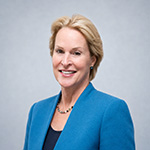
California Institute of Technology (Caltech), USA
Directed evolution | Biocatalysis | Protein engineering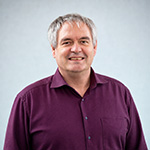
Max Planck Institute for Chemical Energy Conversion, Germany
Electrosynthesis | Electrochemical reaction development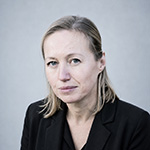
University of Oxford, UK
Fluorine chemistry | Catalysis | Synthetic methodology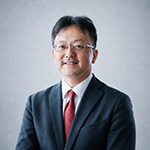
Hokkaido University, Japan
Mechanochemistry | Organoelement chemistry | Organic synthesis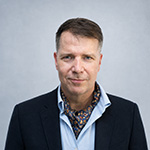
UNIST and Institute for Basic Science (IBS), Republic of Korea
Artificial intelligence | Computer-assisted synthesis | Chemical robotics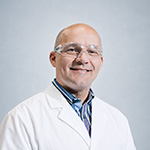
University of Graz, Austria
Flow chemistry | Process intensification | Enabling technologies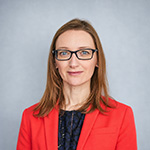
University of Zurich, Switzerland
Synthetic organic chemistry | Organometallic catalysis | Complex molecules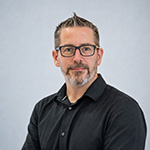
Bristol Myers Squibb, USA
CMC strategy | Pharmaceutical development | Process chemistry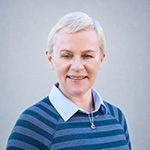
Amgen, USA
Drug substance technologies | Process development | Industrial translation
AsymChem (UK and China teams)
Scale-up of flow chemistry | Photochemistry | Electrochemistry | Novel synthetic technologies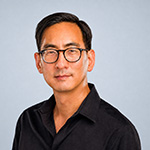
University of Wisconsin–Madison, USA
Photochemistry | Catalysis | Synthetic methodologyProgramme and scientific scope
Scientific themes may include:
Why attend?
Programme highlights
Important dates
Abstract submission
How to submit an abstract
Presentation choices on the Microsoft form
Registration and fees
How to register
Registration fees:
Sponsorship opportunities
Venue and logistics
Contact
More Greenwich events
Events for prospective students
Open Days
Public events and lectures