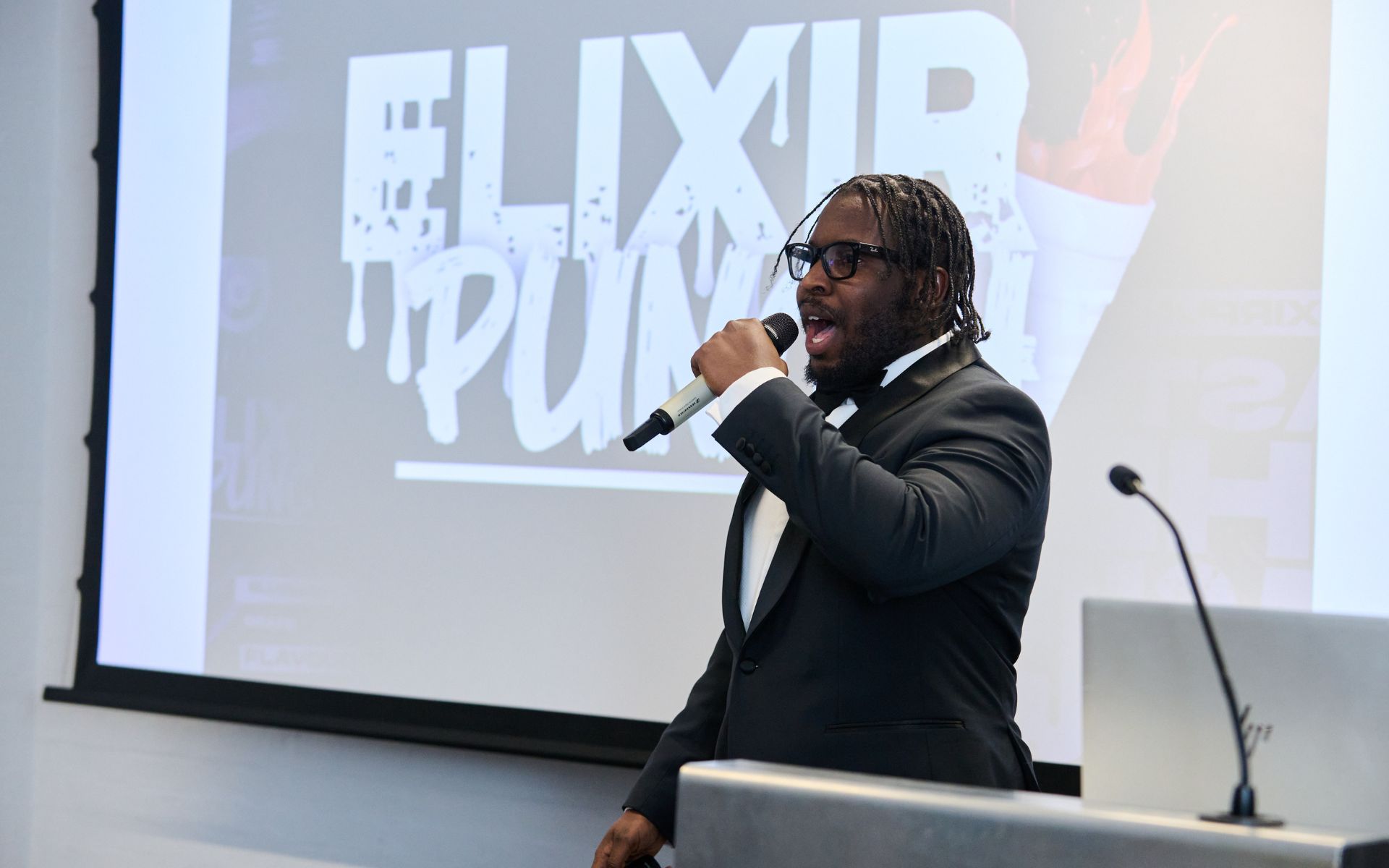
When Alie Sesay entered the Enterprise Challenge, he was already gaining traction with Elixir Punch, but the competition marked a defining moment in his entrepreneurial journey. After delivering a standout pitch, Alie was crowned Greenwich Entrepreneur of the Year, winning £5,000 in Santander funding and setting the stage for rapid growth. Since then, he has secured a five‑figure investment deal, strengthened his manufacturing and distribution strategy, and positioned Elixir Punch as one of London’s most exciting emerging drinks brands.
Tell us about yourself and your business/project. What inspired you to start it, and what’s your mission?
My name is Alie Sesay and I am the founder of Elixir Punch, a London-based drinks brand. Elixir Punch started as a homemade recipe I learned from my older brother when I was 14, making drinks for friends and selling them locally around South London. What began as a small community product has grown into a scalable FMCG brand stocked in multiple stores across London.
The inspiration came from noticing a gap in the market for drinks that genuinely reflect London’s multicultural culture, with bold flavours, real ingredients, and authenticity, without trying to be overly “health-washed” or disconnected from the communities they serve. The mission of Elixir Punch is to celebrate London’s diverse flavour culture while proving that a grassroots brand, built with limited resources, can compete in mainstream retail through strong branding, consistency, and execution.
What was your experience of entering the Enterprise Challenge? What motivated you to apply, and what did you hope to gain from it?
Entering the Enterprise Challenge was a strategic decision. At the time, Elixir Punch was already trading, but I wanted to pressure test the business model in a more formal and structured environment. I applied because I saw it as an opportunity to sharpen my thinking as a founder, receive critical external feedback, and validate that the business could scale beyond informal sales.
My main goal was not just to win funding, but to improve how I articulated the value proposition, understood costs properly, and positioned the brand in a way that would appeal to investors, wholesalers, and retail buyers.
How did the Generator’s workshops, mentoring, or training support you during the competition? What specific skills or insights did you gain that helped your business grow?
The Generator’s workshops were extremely valuable in shifting my mindset from a hustling founder to a strategic operator. The mentoring helped me understand the importance of unit economics, pricing logic, and storytelling, particularly how to communicate why the business exists, not just what it sells.
I gained stronger skills in pitching, financial planning, and thinking long-term about brand positioning rather than short-term sales. This directly influenced how I later approached wholesale conversations and investor discussions.
How did you use the prize funding? What did the funding help you achieve or unlock for your business?
The prize funding was used very deliberately to unlock scale. It contributed towards professional manufacturing, packaging, label production, and marketing materials, all of which were critical steps in moving from small batch production to a retail-ready product.
Without the bursary, these steps would have taken significantly longer. The funding allowed me to move faster, appear more credible to partners, and operate at a level that aligned with national retail standards.
What have you been doing since winning the Enterprise Challenge? How has winning the competition impacted your business and your confidence as a founder?
Since winning, I have focused on scaling production through a manufacturing partner, expanding distribution, and formalising the business structure. I launched an e-commerce website to support nationwide sales and continued expanding physical stockists across London.
Winning the competition significantly boosted my confidence as a founder. It validated years of work and reassured me that my instincts, when combined with structure and discipline, could lead to real outcomes. It also strengthened my belief that I belong in entrepreneurial and commercial spaces.

Have any new opportunities, partnerships, or milestones happened since your win?
Yes. Since winning, I have secured an investor partnership, entered factory-level production, expanded into new retail locations, and developed more professional wholesale and brand materials. These milestones marked a clear transition from early-stage hustle to structured growth.
What was the biggest struggle you faced when starting your business, and how did you overcome it?
The biggest struggle was operating with limited capital and limited guidance. I had to learn everything, from pricing and logistics to branding and negotiation, largely through trial and error. I overcame this by staying consistent, being open to feedback, and gradually surrounding myself with people who had more experience than me.
What advice would you give to other students thinking about starting something of their own? What do you wish you had known before beginning your entrepreneurial journey?
My advice would be to start before you feel ready and focus on learning rather than perfection. You do not need everything figured out; clarity comes from action. I wish I had understood earlier how important structure, financial literacy, and patience are. Entrepreneurship is not about overnight success; it is about consistency, resilience, and long-term thinking.