Key details
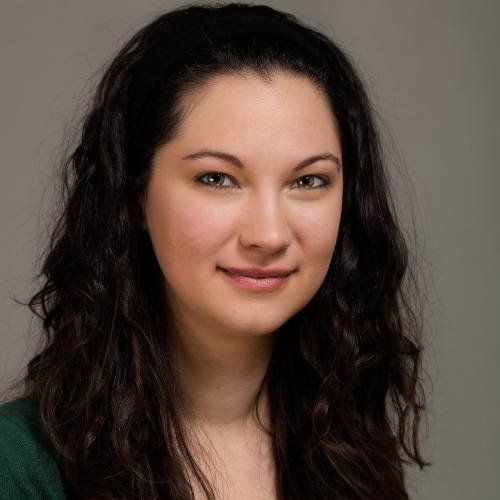
Dr Karolina Janacsek
Associate Professor of Psychology
Dr Karolina Janacsek is a Associate Professor of Psychology in the School of Human Sciences. Karolina obtained her PhD in Experimental and Clinical Neuroscience and her Diploma in Psychology from the University of Szeged, Hungary. She received further training in state-of-the-art neuroscience techniques and analysis methods at University College London (UK), Georgetown University (Washington DC, USA) and Georg-August University (Goettingen, Germany).
Karolina has contributed to teaching psychology and neuroscience at both undergraduate and postgraduate levels. The taught courses covered a wide range of topics from cognitive psychology and neuroscience of learning to developmental psychology and research methods.
Karolina has supervised BSc, MSc as well as PhD students, and has involved them in various research projects, including experimental psychology and EEG studies in the lab, developmental studies conducted on the field (in schools) and clinical studies conducted in medical centres and hospitals. She believes that these projects provide students with a valuable opportunity for learning research methods and scientific rigour, as well as practical skills as they interact with typically and atypically developing children and various patient groups. Karolina attaches great importance to mentoring - her students have successfully participated in scientific championships and at national and international scientific conferences, and have co-authored scientific journal publications.
Karolina is currently available for PhD supervision for students with a strong interest in her research areas.
Posts held previously:
- 2018-19, Visiting Research Fellow, University College London
- 2015-19, Research Fellow/Lecturer, Hungarian Academy of Sciences & Eotvos Lorand University
- 2015, Visiting Research Fellow, Georg-August University of Goettingen
- 2013, Visiting Postdoctoral Fellow, Georgetown University
- 2012-14, Lecturer, Eotvos Lorand University
Responsibilities within the university
- Associate Professor of Psychology
- Module leader and course instructor on BSc Hons Psychology and BSc Hons Psychology with Counselling programmes
- Supervisor of BSc and MSc dissertations
- Library Services Representative for the School of Human Sciences
Recognition
Karolina regularly reviews grant applications for funding bodies such as the European Research Council (Programmes: International Training Networks, Marie Sklodowska-Curie Individual Fellowships, Future and Emerging Technologies), National Science Foundation (USA), and Research Foundation Flanders (Belgium).
Karolina also reviews articles for a number of journals including but not limited to Cortex, Brain Structure and Function, Frontiers in Human Neuroscience, Frontiers in Psychology, Quarterly Journal of Experimental Psychology, and PLoS ONE.
Karolina is a member of the Psychonomic Society (Status: FELLOW), Society for Neuroscience (SfN), Federation of European Neuroscience Societies (FENS) and Cognitive Neuroscience Society (CNS).
Research / Scholarly interests
Karolina specialises in human learning and memory, with a particular interest in procedural memory that underlies the acquisition of motor (e.g., mastering sports), cognitive (e.g., learning languages) and social skills, as well other routine behaviours such as habits. Karolina's research has a cross-disciplinary focus, integrating methods of experimental, developmental and neuropsychology, and cognitive and clinical neuroscience.
Specific research areas:
Age-related differences in learning and consolidation across the lifespan: The primary goals of this line of research are to 1) better understand how children acquire and consolidate knowledge about patterns and regularities that underlie procedural memory, 2) characterize how explicit/controlled and implicit/automatic processes interact during learning and consolidation, and 3) track how learning preferences change from childhood to adulthood and old age.
Learning and consolidation in neurodevelopmental disorders: The main focus in this line of research is on understanding 1) how learning and consolidation of patterns/regularities are altered in neurodevelopmental disorders such as autism, ADHD, Tourette Syndrome and childhood sleep disorders, and 2) how controlled vs. automatic cognitive processes may compensate for the altered functions to achieve normal behavioural performance.
Neurocognitive underpinnings of learning and consolidation: The primary goals are 1) to gain a better understanding of the neurocognitive networks underlying the learning and consolidation of complex patterns/regularities, and 2) how the contribution of these neural networks changes depending on the way of information processing (e.g., controlled vs. automatic), using various methods such as M/EEG and brain stimulation in healthy young adults.
Longitudinal changes in cognitive and social abilities in childhood and their relation to school performance: The primary goals of this line of research are to 1) track longitudinally how a wide range of cognitive and social functions develop between 6 and 14 years of age, 2) characterize how these functions and their changes predict children's school performance (including math and reading skills) and social positions among their peers. Prospectively, this project can help characterize the relationship between childhood cognitive/social abilities and later academic achievements (high school and university admissions).
Recent publications
Article
Tóth-Fáber, Eszter , Farkas, Bence C., Tanczos, Tímea, Németh, Dezső , Janacsek, Karolina (2026), Longitudinal evidence for decreasing statistical learning abilities across childhood. Nature Research. In: , , , . Nature Research, Nature Communications, 17: 10471 . pp. 1-15 2041-1723 (Online) (doi: https://www.nature.com/articles/s41467-026-77261-1?utm_source=rct_congratemailt&utm_medium=email&utm_campaign=oa_20261005&utm_content=10.1038/s41467-026-77261-1#article-info).
Horváth, Kata , Nemeth, Dezso, Janacsek, Karolina, Kóbor, Andrea (2026), Coupling between statistical learning and interference suppression. Springer. In: , , , . Springer, Psychological Research, 90: 160 ISSN: 0340-0727 (Print), 1430-2772 (Online) (doi: https://doi.org/10.1007/s00426-026-02375-6).
Trapp, Sabrina , Németh, Dezso, Janacsek, Karolina (2026), Learning under uncertainty: predictive processing as an integrative framework for educational research. Springer. In: , , , . Springer, Integrative Psychological and Behavioral Science, 60: 55 ISSN: 1932-4502 (Print), 1936-3567 (Online) (doi: https://doi.org/10.1007/s12124-026-10019-y) NB Item availability restricted.
Pedraza, Felipe , Vekony, Teodóra, Farkas, Bence C., Haesebaert, Frederic , Phelipon, Romane , Mihalecz, Imola , Janacsek, Karolina , Tillman, Barbara , Anders, Royce , Plancher, Gaën (2025), The interplay between executive functions and updating predictive representations. Nature Research. In: , , , . Nature Research, Scientific Reports, 15: 30555 2045-2322 (Online) (doi: https://www.nature.com/articles/s41598-025-14876-2#Abs1).
Székely, Anna , Török, Balázs, Kiss, Mariann, Janacsek, Karolina , Németh, Dezső , Orbán, Gergő (2024), Identifying transfer learning in the reshaping of inductive biases. MIT Press. In: , , , . MIT Press, Open Mind, 8 . pp. 1107-1128 2470-2986 (Online) (doi: https://doi.org/10.1162/opmi_a_00158).
Zavecz, Zsofia , Janacsek, Karolina, Simor, Peter, Cohen, Michael X. , Nemeth, Dezso (2024), Similarity of brain activity patterns during learning and subsequent resting state predicts memory consolidation. Elsevier. In: , , , . Elsevier, Cortex: A Journal devoted to the Study of the Nervous System and Behavior, 179 . pp. 168-190 ISSN: 0010-9452 (Print), 1973-8102 (Online) (doi: https://doi.org/10.1016/j.cortex.2024.07.008).
Kobor, Andrea , Janacsek, Karolina, Hermann, Petra, Zavecz, Zsófia , Varga, Vera , Csepe, Valéria , Vidnyanszky, Zoltán , Kovacs, Gyula , Nemeth, Dezso (2024), Finding pattern in the noise: persistent implicit statistical knowledge impacts the processing of unpredictable stimuli. Massachusetts Institute of Technology (MIT Press) - Special Collection: CogNet. In: , , , . Massachusetts Institute of Technology (MIT Press) - Special Collection: CogNet, Journal of Cognitive Neuroscience . pp. 1-26 ISSN: 0898-929X (Print), 1530-8898 (Online) (doi: https://doi.org/10.1162/jocn_a_02173).
Pedraza, Felipe , Farkas, Bence C., Vekony, Teodóra, Haesebaert, Frederic , Phelipon, Romane , Mihalecz, Imola , Janacsek, Karolina , Anders, Royce , Tillman, Barbara , Plancher, Gaën (2024), Evidence for a competitive relationship between executive functions and statistical learning. Nature Research. In: , , , . Nature Research, npj Science of Learning, 9 (30) . pp. 1-14 2056-7936 (Online) (doi: https://doi.org/10.1038/s41539-024-00243-9).
Tóth-Fáber, Eszter , Janacsek, Karolina, Nemeth, Dezso (2024), How do alterations of the basal ganglia affect procedural memory in Tourette syndrome?. Elsevier. In: , , , . Elsevier, Current Opinion in Behavioral Sciences, 57: 101376 . pp. 1-8 ISSN: 2352-1546 (Print), 2352-1554 (Online) (doi: https://doi.org/10.1016/j.cobeha.2024.101376).
Farkas, K , Pesthy, O, Janacsek, Karolina, Nemeth, D (2023), Interpersonal distance theory of autism and its implication for cognitive assessment, therapy, and daily life. SAGE Publications - Association for Psychological Science. In: , , , . SAGE Publications - Association for Psychological Science, Perspectives on Psychological Science ISSN: 1745-6916 (Print), 1745-6924 (Online) (doi: https://doi.org/10.1177/17456916231180593).
Farkas, K , Pesthy, O, Guttengeber, A, Weigl, S , Veres, A , Szekely, A , Komoroczy, E , Szuromi, B , Janacsek, Karolina , Rethelyi, J. M. (2023), Altered interpersonal distance regulation in autism spectrum disorder. Public Library of Science (PLoS). In: , , , . Public Library of Science (PLoS), PLoS ONE, 18: e0283761 (3) . pp. 1-23 1932-6203 (Online) (doi: https://doi.org/10.1371/journal.pone.0283761).
Toth-Faber, Eszter , Nemeth, Dezso, Janacsek, Karolina (2023), Lifespan developmental invariance in memory consolidation: evidence from procedural memory. Oxford University Press - National Academy of Sciences. In: , , , . Oxford University Press - National Academy of Sciences, PNAS Nexus, 2: pgad037 (3) . pp. 1-13 2752-6542 (Online) (doi: https://doi.org/10.1093/pnasnexus/pgad037).
Kobor, A , Toth-Faber, E, Kardos, Z, Takacs, A , Elteto, N , Janacsek, Karolina , Csepe, V , Nemeth, D (2023), Deterministic and probabilistic regularities underlying risky choices are acquired in a changing decision context. Nature Research. In: , , , . Nature Research, Scientific Reports, 13: 1127 . pp. 1-16 2045-2322 (Online) (doi: https://doi.org/10.1038/s41598-023-27642-z).
Farkas, Bence , Krajcsi, Attila, Janacsek, Karolina, Nemeth, Dezso (2023), The complexity of measuring reliability in learning tasks: an illustration using the Alternating Serial Reaction Time task. Springer - Psychonomic Society. In: , , , . Springer - Psychonomic Society, Behavior Research Methods . pp. 1-17 ISSN: 1554-351X (Print), 1554-3528 (Online) (doi: https://doi.org/10.3758/s13428-022-02038-5).
Elteto, N , Nemeth, D, Janacsek, Karolina, Dayan, P (2022), Tracking human skill learning with a hierarchical Bayesian sequence model. Public Library of Science (PLoS). In: , , , . Public Library of Science (PLoS), PLoS Computational Biology, 18: e100 (11) . pp. 1-28 ISSN: 1553-734X (Print), 1553-7358 (Online) (doi: https://doi.org/10.1371/journal.pcbi.1009866).
Vekony, Teodóra , Pleche, Claire, Pesthy, Orsolya, Janacsek, Karolina , Nemeth, Dezso (2022), Speed and accuracy instructions affect two aspects of skill learning differently. Nature Research. In: , , , . Nature Research, npj Science of Learning, 7: 27 2056-7936 (Online) (doi: https://doi.org/10.1038/s41539-022-00144-9).
Kiss, M , Nemeth, D, Janacsek, K (2022), Do temporal factors affect whether our performance accurately reflects our underlying knowledge? The effects of stimulus presentation rates on the performance versus competence dissociation. Elsevier Ltd.. In: , , , . Elsevier Ltd., Cortex, 157 . pp. 65-80 ISSN: 0010-9452 (Print), (doi: https://doi.org/10.1016/j.cortex.2022.09.003).
Park, Jungtak , Janacsek, Karolina, Nemeth, Dezso, Jeon, Hyeon-Ae (2022), Reduced functional connectivity supports statistical learning of temporally distributed regularities. Elsevier - Academic Press. In: , , , . Elsevier - Academic Press, NeuroImage, 260: 119459 ISSN: 1053-8119 (Print), 1095-9572 (Online) (doi: https://doi.org/10.1016/j.neuroimage.2022.119459).
Janacsek, Karolina , Evans, Tanya, Kiss, Mariann, Shah, Leela , Blumenfeld, Hal , Ullman, Michael (2022), Subcortical cognition: the fruit below the rind. Annual Reviews. In: , , , . Annual Reviews, Annual Review of Neuroscience, 45 . pp. 361-386 ISSN: 0147-006X (Print), 1545-4126 (Online) (doi: https://doi.org/10.1146/annurev-neuro-110920-013544).
Torok, Balazs , Nagy, David, Kiss, Mariann, Janacsek, Karolina , Nemeth, Dezso , Orban, Gergo (2022), Tracking the contribution of inductive bias to individualised internal models. Public Library of Science. In: , , , . Public Library of Science, PLoS Computational Biology, 18: e1010182 (6) ISSN: 1553-734X (Print), 1553-7358 (Online) (doi: https://doi.org/10.1371/journal.pcbi.1010182).
Horvath, K , Nemeth, D, Janacsek, Karolina (2022), Inhibitory control hinders habit change. Nature. In: , , , . Nature, Scientific Reports, 12: 8338 2045-2322 (Online) (doi: https://doi.org/10.1038/s41598-022-11971-6).
Vekony, Teodora , Ambrus, Geza Gergely, Janacsek, Karolina, Nemeth, Dezso (2022), Cautious or causal? Key implicit sequence learning paradigms should not be overlooked when assessing the role of DLPFC (Commentary on Prutean et al.). Elsevier. In: , , , . Elsevier, Cortex, 148 . pp. 222-226 ISSN: 0010-9452 (Print), 1973-8102 (Online) (doi: https://doi.org/10.1016/j.cortex.2021.10.001).
Fanuel, L , Pleche, C, Vekony, T, Janacsek, Karolina , Nemeth, D , Quentin, R (2022), How does the length of short rest periods affect implicit probabilistic learning?. Elsevier - Academic Press. In: , , , . Elsevier - Academic Press, NeuroImage, 2: 100078 (1) ISSN: 1053-8119 (Print), 2666-9560 (Online) (doi: https://doi.org/10.1016/j.ynirp.2022.100078).
Farkas, Bence , Tóth-Faber, Eszter, Janacsek, Karolina, Nemeth, Dezso (2021), A process-oriented view of procedural memory can help better understand Tourette’s syndrome. Frontiers Media. In: , , , . Frontiers Media, Frontiers in Human Neuroscience, 15: 683885 1662-5161 (Online) (doi: https://doi.org/10.3389/fnhum.2021.683885).
Toth-Faber, E , Tarnok, Z, Takacs, A, Janacsek, Karolina , Nemeth, D (2021), Access to procedural memories after one year: evidence for robust memory consolidation in Tourette syndrome. Frontiers Media. In: , , , . Frontiers Media, Frontiers in Human Neuroscience, 15: 715254 ISSN: 1662-5161 (Print), 1662-5161 (Online) (doi: https://doi.org/10.3389/fnhum.2021.715254).
Quentin, Romain , Fanuel, Lison, Kiss, Mariann, Vernet, Marine , Vekony, Teodora , Janacsek, Karolina , Cohen, Leonardo , Nemeth, Dezso (2021), Statistical learning occurs during practice while high-order rule learning during rest period. Nature Research. In: , , , . Nature Research, NPJ Science of learning, 6: 14 ISSN: 2056-7936 (Print), 2056-7936 (Online) (doi: https://doi.org/10.1038/s41539-021-00093-9).
Toth-Faber, Eszter , Janacsek, Karolina, Szollosi, Agnes, Keri, Szabolcs , Nemeth, Dezso (2021), Regularity detection under stress: faster extraction of probability-based regularities. Public Library of Science (PLoS). In: , , , . Public Library of Science (PLoS), PLoS ONE, 16: e0253123 (6) ISSN: 1932-6203 (Print), (doi: https://doi.org/10.1371/journal.pone.0253123).
Toth-Faber, Eszter , Janacsek, Karolina, Nemeth, Dezso (2021), Statistical and sequence learning lead to persistent memory in children after a one-year offline period. Nature. In: , , , . Nature, Scientific Reports, 11: 12418 ISSN: 2045-2322 (Print), (doi: https://doi.org/10.1038/s41598-021-90560-5).
Marno, Hanna , Danyi, Robert, Vekony, Teodora, Janacsek, Karolina , Nemeth, Dezso (2021), Prompting teaching modulates children's encoding of novel information by facilitating higher-level structure learning and hindering lower-level statistical learning. Elsevier B.V.. In: , , , . Elsevier B.V., Cognition, 213: 104784 ISSN: 0010-0277 (Print), (doi: https://doi.org/10.1016/j.cognition.2021.104784).
Kobor, Andrea , Kardos, Zsofia, Takacs, Adam, Elteto, Noemi , Janacsek, Karolina , Toth-Faber, Eszter , Csepe, Valeria , Nemeth, Dezso (2021), Adaptation to recent outcomes attenuates the lasting effect of initial experience on risky decisions. Nature Publishing Group. In: , , , . Nature Publishing Group, Scientific reports, 11: 10132 ISSN: 2045-2322 (Print), 2045-2322 (Online) (doi: https://doi.org/10.1038/s***********9456-1).
Takács, Ádám , Kóbor, Andrea, Kardos, Zsófia, Janacsek, Karolina , Horváth, Kata , Beste, Christian , Nemeth, Dezso (2021), Neurophysiological and functional neuroanatomical coding of statistical and deterministic rule information during sequence learning. Wiley. In: , , , . Wiley, Human Brain Mapping, 42 (10) . pp. 3182-3201 ISSN: 1065-9471 (Print), 1097-0193 (Online) (doi: https://doi.org/10.1002/hbm.25427).
Kóbor, Andrea , Kardos, Zsófia, Horváth, Kata, Janacsek, Karolina , Takács, Ádám , Csépe, Valéria , Nemeth, Dezso (2021), Implicit anticipation of probabilistic regularities: Larger CNV emerges for unpredictable events. Elsevier. In: , , , . Elsevier, Neuropsychologia, 156: 107826 . pp. 1-13 ISSN: 0028-3932 (Print), 1873-3514 (Online) (doi: https://doi.org/10.1016/j.neuropsychologia.2021.107826).
Toth-Faber, E , Tarnok, Z, Janacsek, Karolina, Kobor, A , Nagy, P , Farkas, B , Olah, S , Merkl, D , Hegedus, O , Nemeth, D (2021), Dissociation between two aspects of procedural learning in Tourette syndrome: enhanced statistical and impaired sequence learning. Routledge - Taylor & Francis. In: , , , . Routledge - Taylor & Francis, Child Neuropsychology, 27 (6) . pp. 799-821 ISSN: 0929-7049 (Print), 1744-4136 (Online) (doi: https://doi.org/10.1080/09297049.2021.1894110).