A technician-led project supported by the Institute for Inclusive Communities and Environments is demonstrating how digital technologies can help make cultural heritage more accessible.
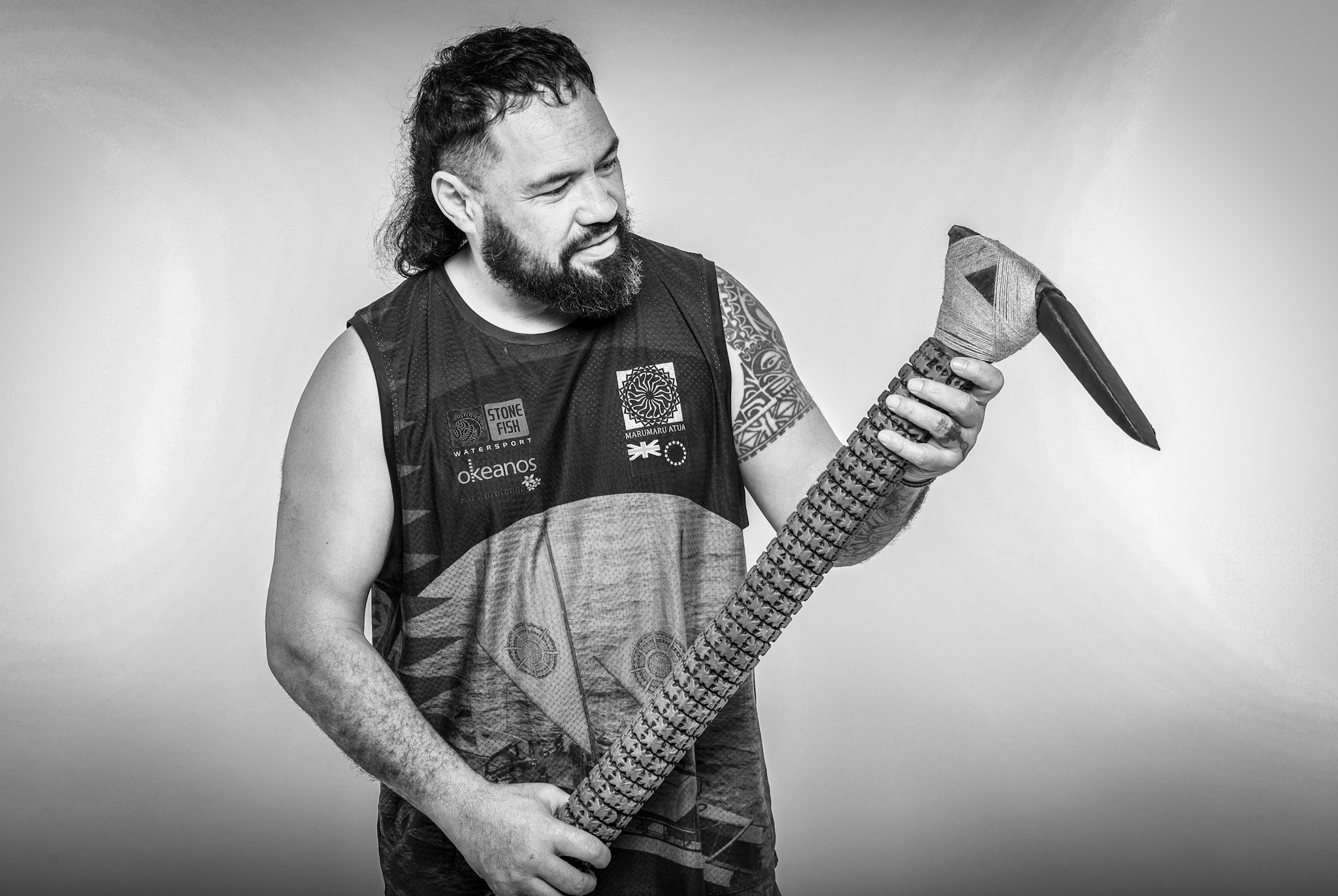
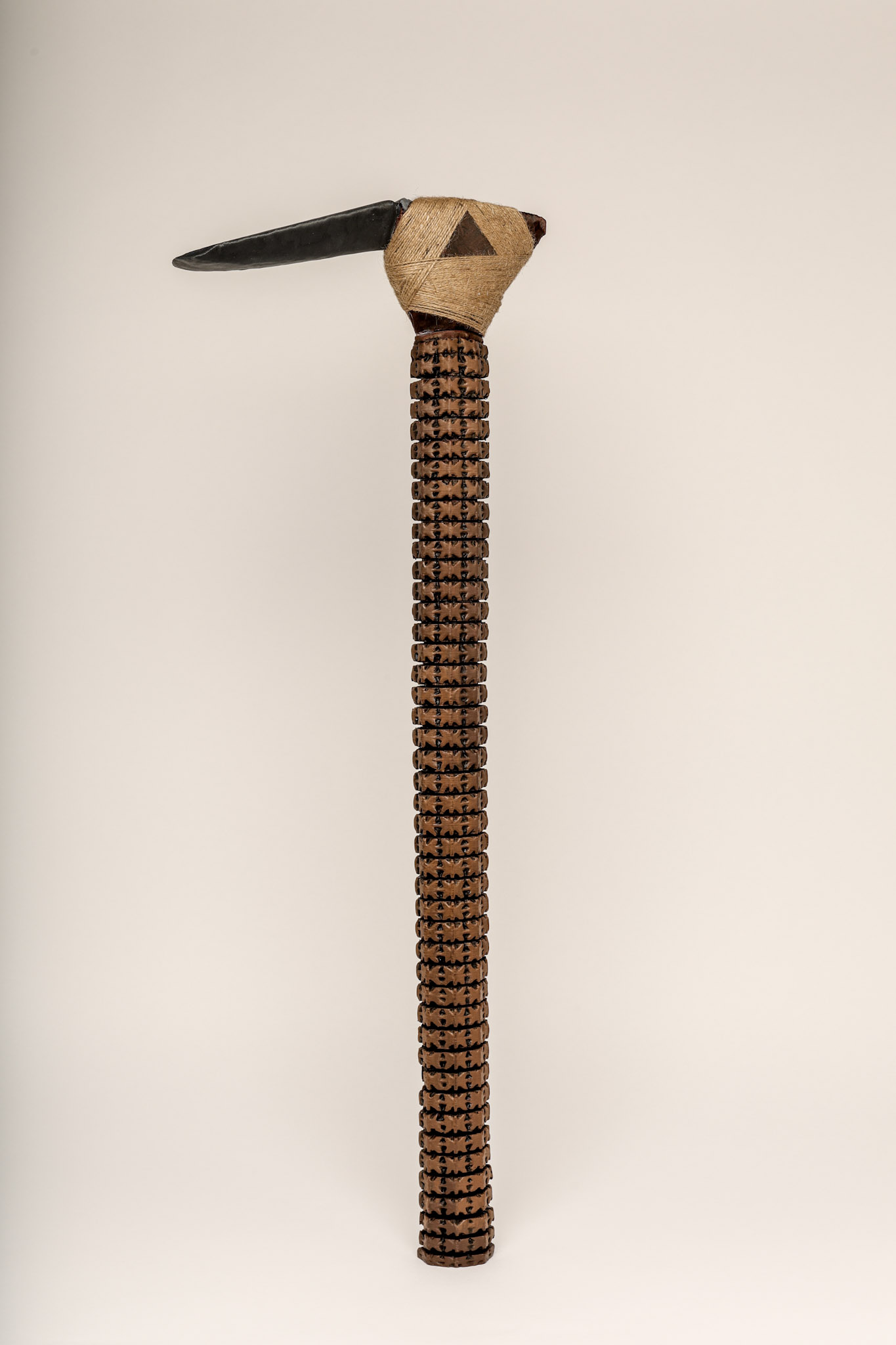
A collaboration between Robbie Teremoana Atatoa, a Mangaian traditional carver, the Royal Museums Greenwich, and Philip Hudson, Design Support Team Leader in the School of Design & Creative Industries, the project recreated a ceremonial Mangaian toki held in the collection of Royal Museums Greenwich using photogrammetry, digital modelling and 3D printing.
Mangaian toki are ceremonial adzes associated with Mangaia, one of the Cook Islands in the South Pacific. Hundreds were removed from the islands during the nineteenth century and are now held in museums around the world. While these institutions have helped preserve the objects, they are often physically inaccessible to the communities and traditions from which they came.
This project explored whether modern digital technologies could create a faithful physical reproduction that could be handled, studied and shared while the original remained safely preserved in the museum collection.
A collaboration built through existing connections
The collaboration emerged through connections between the University of Greenwich and Royal Museums Greenwich. During a visit to the museum, Professor Andrew Knight-Hill was introduced to Atatoa, who was undertaking research into Mangaian toki and their makers.
Recognising the University's expertise in digital scanning and object reproduction, discussions quickly developed around how those capabilities might contribute to the project.
For Hudson, the collaboration built on experience the team has developed over several years through heritage scanning and reconstruction projects.
“This is really a continuation of work we've been doing for some time,” Hudson explained. “People hear about the projects and approach us, initially looking for advice, but often those conversations develop into collaborations.”
Supporting technician-led research and knowledge exchange
The project was supported through the ICE Collaborative Research Development Fund, which awarded approximately £4,000 to purchase specialist photographic equipment, scanning resources and fabrication materials.
The funding enabled the team to capture, model and reproduce the toki in high detail, while also supporting a separate heritage reconstruction project undertaken in partnership with the Royal Greenwich Heritage Trust. It is an example of how relatively small investments in specialist equipment and expertise can create opportunities for meaningful partnerships with museums, cultural practitioners and external organisations.
The project also highlights the important contribution that technical staff can make to research and knowledge exchange activities. Rather than providing technical support to an existing research project, Hudson led the funding bid, developed the methodological approach and coordinated external collaborations.
As a signatory to the Technician Commitment, the University of Greenwich has pledged to support the visibility, recognition, career development and sustainability of its technical staff.
Combining digital technology with traditional knowledge
Working alongside colleagues at Royal Museums Greenwich, the research team used photogrammetry to create a highly detailed digital model of the original artefact. Hundreds of photographs were captured and processed into a three-dimensional reconstruction before the model was refined and prepared for fabrication.
The finished reproduction was produced using 3D printing technology and carefully finished to reflect the appearance and wear patterns of the original object.
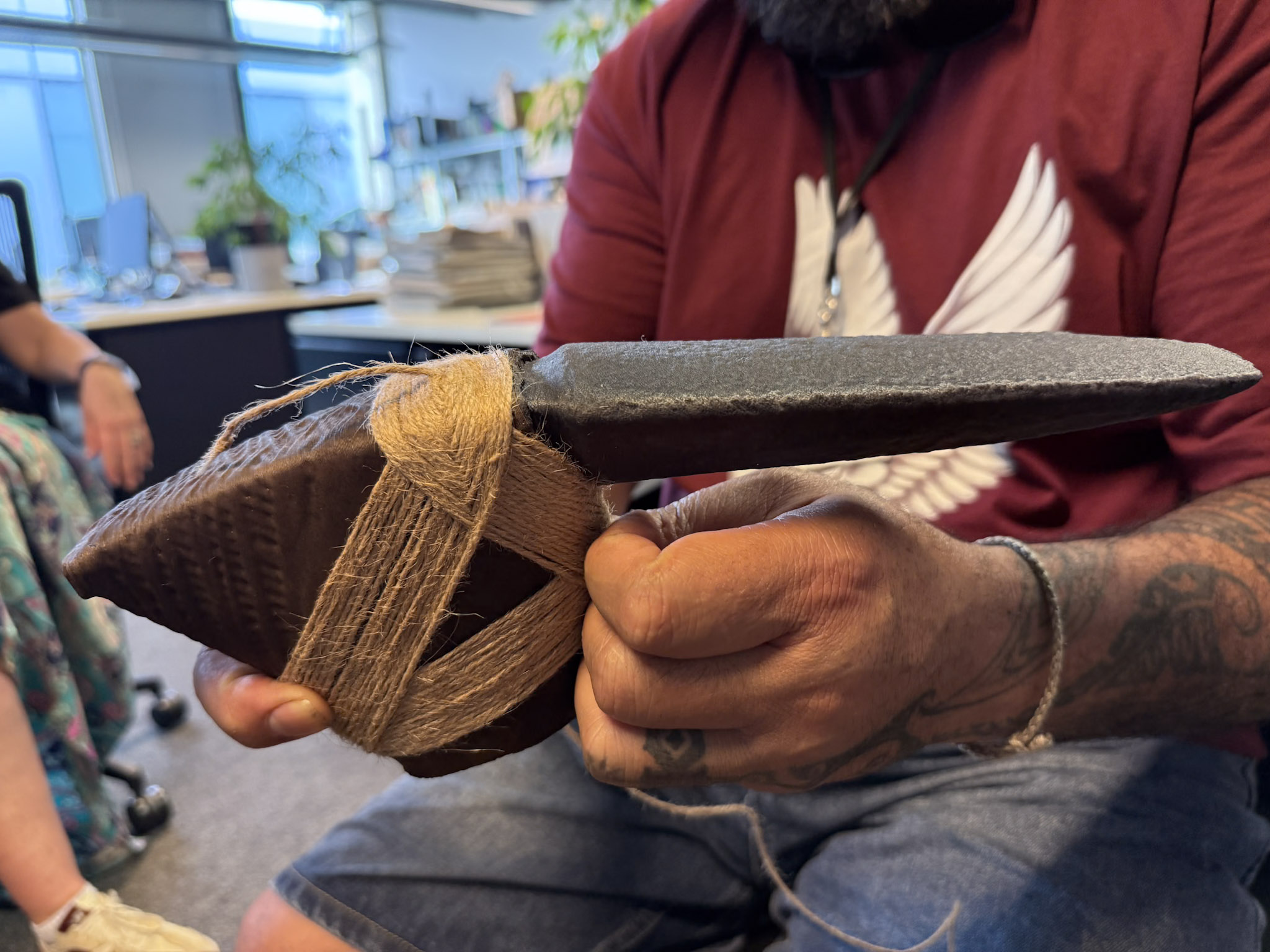
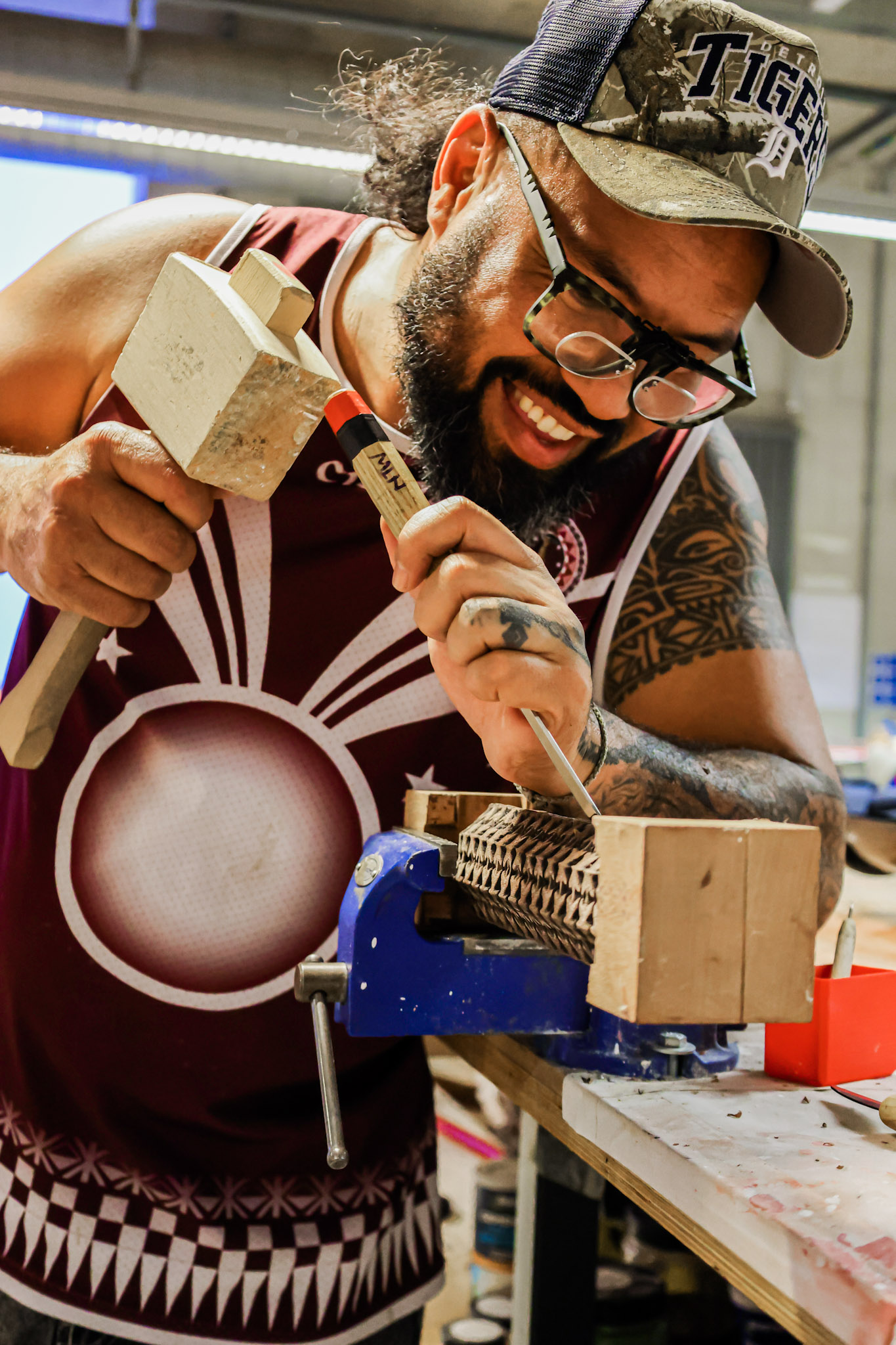
Some aspects of the artefact, however, could not be recreated through digital methods alone. Robbie could not resist taking it further by hand-chiselling the machine-cut form to sharpen up the edges. The traditional coconut-fibre lashing that secures the stone blade to the shaft was also completed by Atatoa, whose carving practice is directly connected to the cultural tradition from which the object originates.
The result is a unique combination of digital heritage technology and living cultural knowledge. While the object's form was recreated through scanning and fabrication, traditional expertise remained essential to completing the reproduction authentically.
Knowledge exchange in action
One of the most significant outcomes of the project has been the exchange of knowledge between technical specialists and cultural practitioners. The finished reproduction has since travelled to New Zealand with Atatoa, where it is supporting the study, revitalisation and sharing of Mangaian carving traditions.
According to Hudson, the project has generated insights that extend beyond the reproduction itself.
“Robbie told us that seeing how the object was constructed through the scanning and reconstruction process gave him some new ideas about how it he could approach elements of his carving techniques,” Hudson said.
That exchange reflects one of the project's central achievements. Digital technologies were used not only to reproduce an artefact, but also to create new opportunities for learning, interpretation and cultural engagement.
Looking ahead
The success of the project is already generating interest from other organisations interested in applying digital scanning and reconstruction techniques to heritage collections.
For Hudson, this collaboration demonstrates the value of bringing together technical expertise, cultural practitioners and institutional collections to create new forms of access and engagement.
Helen Mears, Head of Curatorship & Research at Royal Museums Greenwich, added,
“While the creation of the new fabricated toki is important as it will support Robbie’s teaching, even more important is the process of coming together to share knowledge and to build shared understanding. We are grateful to Robbie, and to Phil and his team for sharing their respective expertise and excited about the potential of this new partnership to promote wider access to cultural property for stakeholder communities.”
Supported by Institute funding, the project has shown how digital heritage methods can extend the reach of museum collections beyond archive stores and exhibition spaces, helping connect historical artefacts with the communities, traditions and practitioners that continue to give them meaning today.
You can learn more about the project by visiting the Captivate: Spatial Modelling blog and the Centre for Spatial and Digital Ecologies CentrePress website.