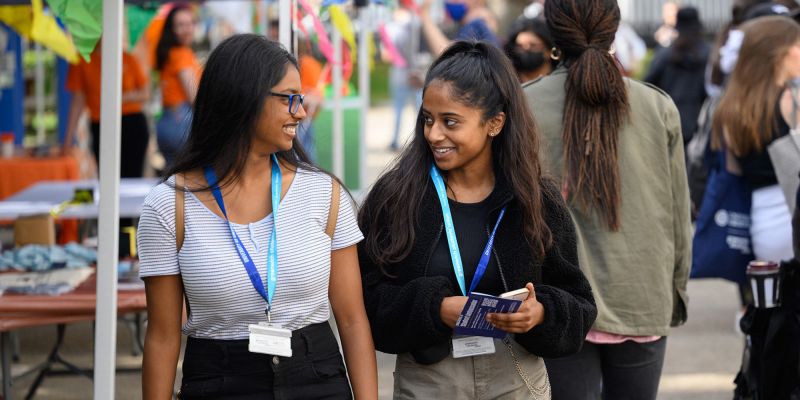
The Student Research Hub Symposium, hosted by the Institute for Inclusive Communities and Environments, brought together staff and students from across the University of Greenwich to share research addressing a wide range of contemporary social, cultural and environmental issues.
Delivered across an online event on Wednesday 24 June and an in-person symposium on Friday 26 June, the programme showcased emerging and established research spanning lived experience, legal systems, higher education, and creative and practice-based work. Together, the events highlighted the depth and diversity of research taking place across the University and its engagement with questions of inequality, justice, place and participation.
The Student Research Hub, led by Louise Hewitt, Associate Professor in Law, plays a central role in supporting the development of emerging researchers across the Institute. Its primary aim is to support students in developing their research skills while working alongside academics to foster positive and meaningful research relationships. The Symposium reflects this ethos in practice, creating a space where students and staff can share work, exchange ideas and build collaborative research communities.
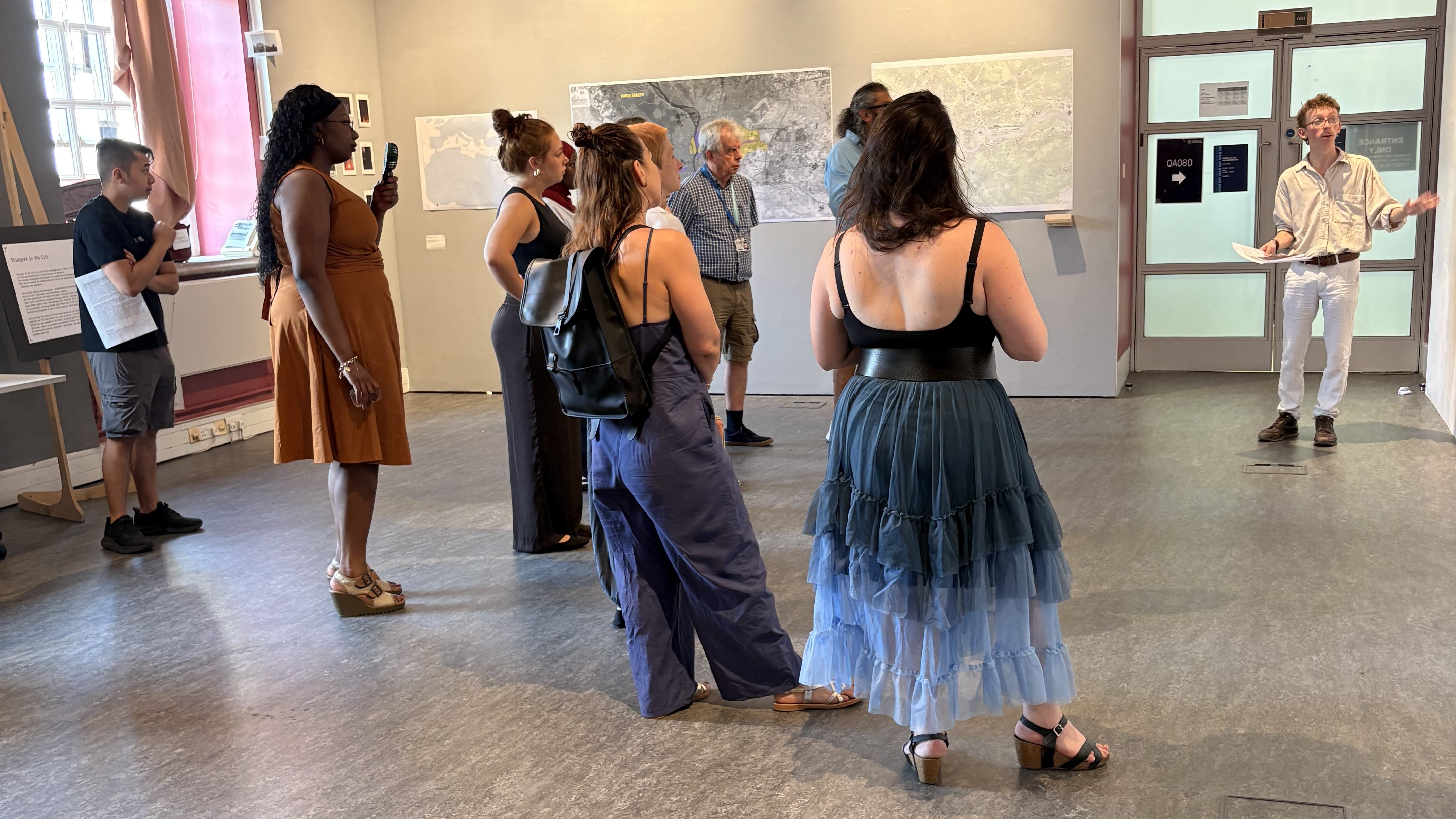
Despite the heatwave conditions, the in-person symposium created a lively and generous space for discussion, with presentations, gallery displays and informal conversations continuing well into the afternoon and evening. Across both formats, the focus remained firmly on the substance of the research and the communities, experiences and systems it seeks to understand and transform.
A strong theme running through the symposium was the value of lived experience as a source of knowledge and a driver of change. Presentations explored how personal narratives and participatory approaches can challenge entrenched inequalities, from critical examinations of the politics of care in post-COVID England to research on leadership among people with experience of the criminal justice system. Work in this strand demonstrated how lived experience reshapes research questions and methods, while foregrounding issues of power, representation and accountability. Creative-critical approaches also featured prominently, with projects using autobiographical writing and autoethnography to examine identity, ageing and the production of knowledge through practice.
Questions of justice and accountability were further developed through legal research that engaged with both historical and contemporary frameworks. Papers examined the persistence of harmful narratives within legal systems, including the operation of rape myths in postcolonial contexts, and interrogated the limits of existing regulatory approaches to corporate negligence. Together, these contributions highlighted the importance of interdisciplinary thinking in legal scholarship and the need to confront structural inequalities embedded within legal institutions.
The symposium also showcased work at the intersection of research and pedagogy, with projects exploring how students engage with complex global challenges within higher education. Research on digital evidence and war crimes demonstrated how emerging forms of open-source intelligence are reshaping both legal practice and teaching, while work on care-experienced students examined how universities can better support equitable pathways into graduate-level careers. These projects reflected a shared commitment to inclusive education and to embedding research-led learning within the student experience.
Creative and practice-based research formed another vital strand of the symposium, with contributions spanning writing, architecture, film and interdisciplinary heritage work. Projects explored themes of burnout and productivity through creative practice, interrogated experiences of estrangement and belonging in urban environments, and experimented with alternative narrative structures in screenwriting. Other work demonstrated the role of creative collaboration in bringing underexplored cultural sites into public and academic visibility, as well as the use of design-led approaches to address environmental and spatial challenges, including the future of riverside development and the relationship between architecture and natural processes such as decay.
Across both formal presentations and gallery displays, there was a clear emphasis on research as something that is not only analytical but also material, visual and participatory. Whether through installations, written work, design objects or digital outputs, students and researchers demonstrated how different forms of practice can generate insight and open new ways of engaging audiences.
The symposium also created opportunities for connection across disciplines and career stages. Conversations continued during breaks, over lunch and into the evening networking session, reflecting the collaborative ethos of the Institute for Inclusive Communities and Environments and its commitment to supporting emerging researchers.
About the Institute for Inclusive Communities and Environments
The Institute for Inclusive Communities and Environments at the University of Greenwich fosters interdisciplinary research that enriches lives, empowers communities and improves the world. Drawing on expertise across the arts, humanities and social sciences, the Institute works collaboratively with communities, organisations and policymakers in the UK and internationally to address the social and environmental challenges of our time — from inequality and social justice to sustainable cities, health and wellbeing, and the protection of natural ecosystems. The Institute is home to six research centres each bringing together researchers from different disciplines to tackle complex real-world problems. For more information, visit www.gre.ac.uk/las/ice.