Data Science with Placement Year, MSc
Gain cutting-edge data science expertise and real-world experience with an MSc that includes a transformative placement year.
This two‑year MSc in Data Science with a placement year prepares you for global careers in data science, AI and machine learning through a blend of advanced study and real industry experience. You’ll work with cutting‑edge technologies, apply your skills during a professional placement and graduate with both strong academic knowledge and practical expertise.
International students benefit from dedicated support through the university’s partnerships with Twin Group and Step Recruitment, helping you secure high‑quality placements and build connections with leading employers. This proven model has supported thousands of students and leads to excellent long‑term career outcomes.
You’ll study key areas such as big data, machine learning, programming and data visualisation, with options including cloud computing and blockchain for FinTech. A major MSc project lets you specialise further and showcase your abilities.
Students also enjoy secure university accommodation on or near campus and a vibrant Students’ Union offering events, societies and support services that help you feel at home from day one.
Graduates progress into sought‑after roles across finance, healthcare, technology and government. With global demand for data specialists continuing to rise, this programme offers a powerful route into a future‑focused and highly rewarding career.
Follow the Faculty on Instagram and see what it will be like to study with us.
Interested in a different year?
Select your preferred
to view up to date information.
Location
Duration
2 years sandwich
Start month
September; January
Fees information
For fee information related to this course, please see fees section below
What you should know about this course
What you will study
Indicative Modules
Year 1
Students are required to study the following compulsory modules.
- MSc Project (60 credits)
- Big Data (15 credits)
- Data Visualisation (15 credits)
- Machine Learning (15 credits)
- Programming Fundamentals for Data Science (15 credits)
- Ethics in Data Science (15 credits)
- Essential Professional and Academic Skills for Masters Students
- Statistical Methods for Time Series Analysis (15 credits)
Students are required to choose 15 credits from this list of options.
- Clouds, Grids and Virtualisation (15 credits)
- Blockchain for FinTech Applications (15 credits)
Students are required to choose 15 credits from this list of options.
- Technologies for Anti-Money Laundering and Financial Crime (15 credits)
- Graph and Modern Databases (15 credits)
Year 2
- MSc Project (Continued)
- Industrial Practice (60 credits)

About the course team
Welcome to our Masters in Data Science, which is taught from within the School of Computing and Mathematical Sciences. Your teaching team includes academics and practitioners with experience in various aspects of Data Science such as AI and Big Data. Our teaching is informed by research and consultancy work, as well as by the latest teaching best practice.
Come and meet us
We are offering virtual events so you can still experience how Greenwich could be the right university for you.
Next Open Days


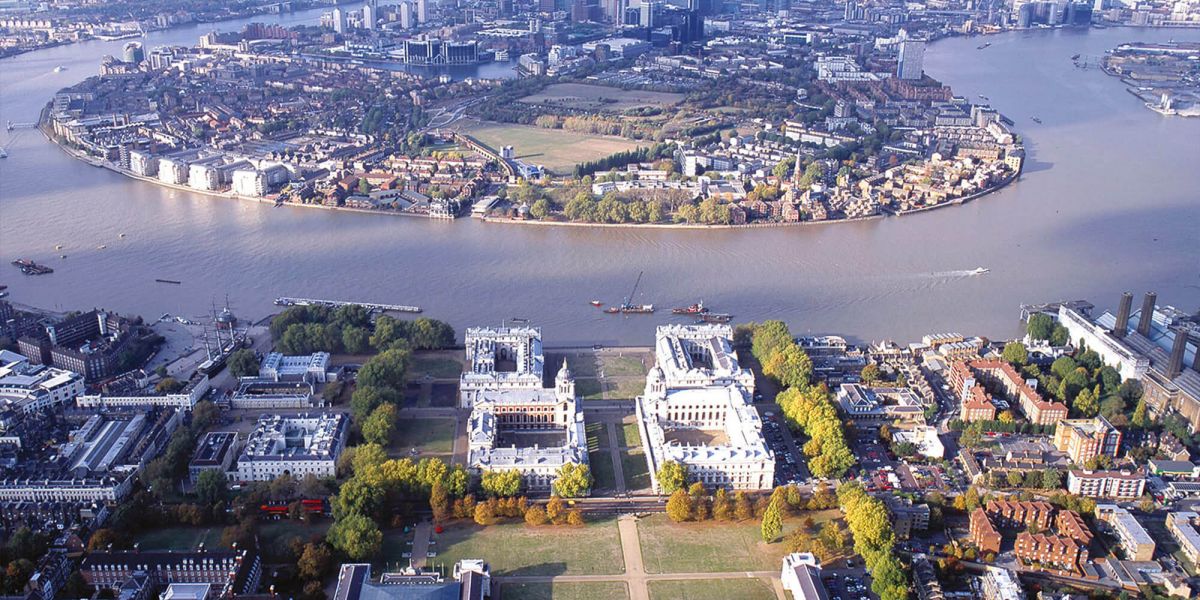
Got a question?
To find out more about our Open Days and Campus Tours or if you need any assistance, please email opendays@gre.ac.uk.
Entry requirements
An undergraduate (honours) degree at 2:2, or above, in Computing, Computer Science, AI, Data Science, Mathematics, Physics, Engineering, Statistics, IT or a relevant STEM subject.
Applicants without a degree that have substantial commercial/industrial experience including software development using modern programming languages and design may be considered.
Applicants with a degree in another discipline should consider MSc Data Science and its Applications, a specialist course designed for applicants from any non Computing background.
For more information, use our contact form or call us on 020 8331 9000.
You can also read our admissions policy.
If you are from outside the UK
Further information about entry
We welcome applications from mature students and/or students with professional work backgrounds.
Available to overseas students?
Yes
Can I use Prior Learning?
For entry: applicants with professional qualifications and/or four years of full-time work experience will be considered on an individual basis.
For exemption: If you hold qualifications or courses from another higher education institution, these may exempt you from courses of this degree.
How you will learn
Teaching
In a typical week, learning takes place through a combination of lectures, tutorials and practical work in the labs. You'll be able to discuss and develop your understanding of topics covered in lectures in smaller group sessions, and to put your knowledge into practice in our specialist computer laboratories.
Teaching hours may fall between 9am and 9pm, depending on your elective courses and tutorials.
Class sizes
Lectures are usually attended by larger groups and seminars/tutorials by smaller groups. This can vary more widely for modules that are shared between degrees.
Independent learning
Outside of timetabled sessions, you'll need to dedicate time to self-study to complete coursework, and prepare for presentations and exams. Our Stockwell Street library and online resources will support your further reading and research.
You can also join a range of student societies, including our Computer and Technology Society, Gre Cyber Sec, Forensic Science Society, and Games Development Society.
Overall workload
Your overall workload consists of lectures, tutorials, labs, independent learning, and assessments. For full-time students, the workload should be roughly equivalent to a full-time job. You are expected to study for around 600 hours during the placement - around 13 hours a week in addition to the time spent at work. That is generally the minimum time needed for reading, note-taking, and writing to complete the material and assessment. If English isn’t your first language, you may need more time.
Assessment
On this course, students are assessed by coursework, examinations and a project. Some modules may also include practice assessments, presentations, demonstrations, and reports, which help you to monitor progress and make continual improvement.
Feedback summary
University policy is to give feedback on assignments within 15 working days of the coursework submission date. Examination results will be available within 28 days.
Dates and timetables
The academic year runs from September to the end of August, as the students are working on their project full-time during the summer months.
Full teaching timetables are not usually available until term has started. For any queries, please call 020 8331 9000.
Fees and funding
University is a great investment in your future. English-domiciled graduate annual salaries were £10,500 more than non-graduates in 2023 - and the UK Government projects that 88% of new jobs by 2035 will be at graduate level.
(Source: DfE Graduate labour market statistics: 2023/DfE Labour market and skills projections: 2020 to 2035).
| Cohort | Full time | Part time | Distance learning |
|---|---|---|---|
| Home | £14,950 | N/A | N/A |
| International | £21,850 | N/A | N/A |
Accommodation costs
Whether you choose to live in halls of residence or rent privately, we can help you find what you're looking for. University accommodation is available from £126.35 per person per week (bills included), depending on your location and preferences. If you require more space or facilities, these options are available at a slightly higher cost.
Scholarships and bursaries
We offer a wide range of financial help including scholarships and bursaries.
International Scholarship Award
International students can apply for the International Scholarship Award, which is a single year tuition fee discount up to £3,000 if they hold an offer to study at the University of Greenwich for September 2026.
International Scholarship Award
Greenwich Progression Bursary
£3,000 bursary for home fee paying University of Greenwich final year undergraduate students and Alumni.
EU Bursary
Following the UK's departure from the European Union, we are supporting new EU students by offering a substantial fee-reduction for studying.
Financial support
We want your time at university to be enjoyable, rewarding, and free of unnecessary stress, so planning your finances before you come to university can help to reduce financial concerns. We can offer advice on living costs and budgeting, as well as on awards, allowances and loans.
If there are any field trips, students may need to pay their travel costs.
Careers and placements
What sort of careers do graduates pursue?
Graduates from this Data Science course are equipped for employment in industry, commerce or research with a proficiency in the key theoretical and practical areas of data science, including their application to modern artificial intelligence systems.
Do you provide employability services?
As well as support from the Faculty of Engineering and Science Placements Team, the University partners with an organisation that specialises in guiding students to secure an industrial practice placement. However, it is ultimately the student’s responsibility to secure an appropriate placement. This could be with a local or international employer in a relevant industrial sector.
Accommodation
Greenwich
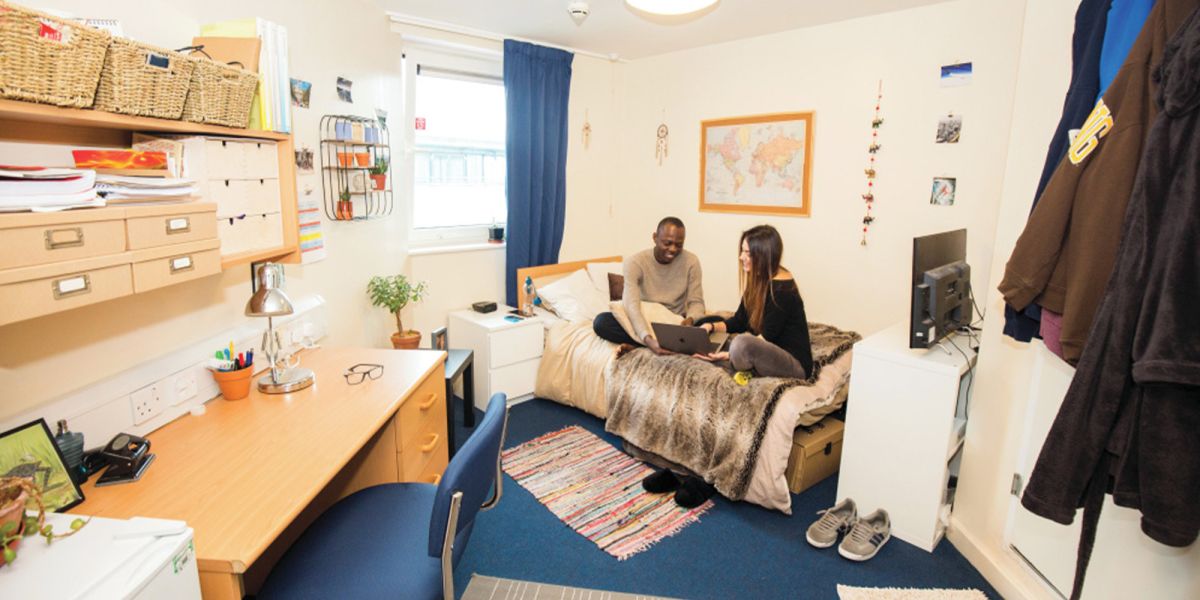
Living in halls of residence is a great way to make new friends and get into the social side of university life. With four great locations, all minutes away from the campus and the centre of historic Greenwich , you will be at the heart of one of the most beautiful university settings in the UK.
Rooms start at £146.30/wk and include Wi-Fi, utility bills, access to our on-campus gym and 24-hour security - and just a 10-minute train journey to central London. Students based at our Greenwich campus can also choose to live the Student Village at Avery Hill, which is only a short ride on our free shuttle bus.


Support and advice
Academic skills and study support
We want you to make the most of your time with us. You can access study skills support through your tutor, lecturers, project supervisor, subject librarians, and our academic skills centre.
We provide additional support in Mathematics.
Support from the department
As a Computing and Mathematical Science School student you can enter our Oracle mentoring scheme. This helps students to liaise with industry for advice on careers, professional insight, guidance in looking for jobs, and developing employability and presentation skills.
Not quite what you were looking for?
We've got plenty of other courses for you to choose from. Browse our postgraduate courses or check our related courses below.....
Computer science at the University of Greenwich
Our Computer Science programmes are ideal for those keen on developing strong technical skills, advanced programming, and the science behind AI and algorithms.
Visit our computer science degrees page.
Computer science degrees
Studying computer science and computing at the University of Greenwich
Our computer science and computing degrees prepare you for a high-powered career in data science, software development and everything in-between. Our courses blend innovation with real-world application.
Visit our computer science and computing degrees page.
Computer science and computing subjects

Computer engineering degrees
These pioneering degrees combine technical engineering with an impressive depth of computer theory. You'll gain the specialist knowledge and skills needed to work in this cutting-edge industry.

Computer science degrees
Our Computer Science programmes are ideal for those keen on developing strong technical skills, advanced programming, and the science behind AI and algorithms.

Computing degrees
If you're passionate about applying technology in practical and business contexts, our Computing and Business Computing degrees are tailored for you. Blending technical skills with business acumen they will prepare you for a wide range of careers.
Mode of study
Select from the dropdown below.
| Course level | |
| UCAS code | |
| Duration | |
| Location |